
During a study conducted in a controlled environment, we recorded the movements of patients with late-stage ALS using the Syde® platform and obtained unexpected results. Here is the story of how we tested and improved stride detection in patients losing ambulation, and how it enabled us to measure a new concept of interest in functional mobility: residual ambulation.
Amyotrophic lateral sclerosis (ALS) is a degenerative motor neuron disease that impacts all muscles, notably resulting in proximal weakness. Researchers therefore postulated that Syde, a DHT with a proven track record in functional mobility assessment, could be used to quantify disability progression in ALS. Before initiating clinical development, we performed the analytical validation of Syde on ambulant participants with ALS. Based on our experience in a variety of patient populations, we had reason to be confident in this first stage of development. Seven patients with ALS were asked to walk along a predefined 8-shaped trajectory in a controlled environment, while wearing Syde sensors at the ankles and being recorded by optical motion capture. They covered a wide spectrum of motor function impairment, from mild to very severe. We then ran our stride detection and measurement algorithms on the sensor data, and compared the results to reference measurements from optical motion capture and annotated sensor data.
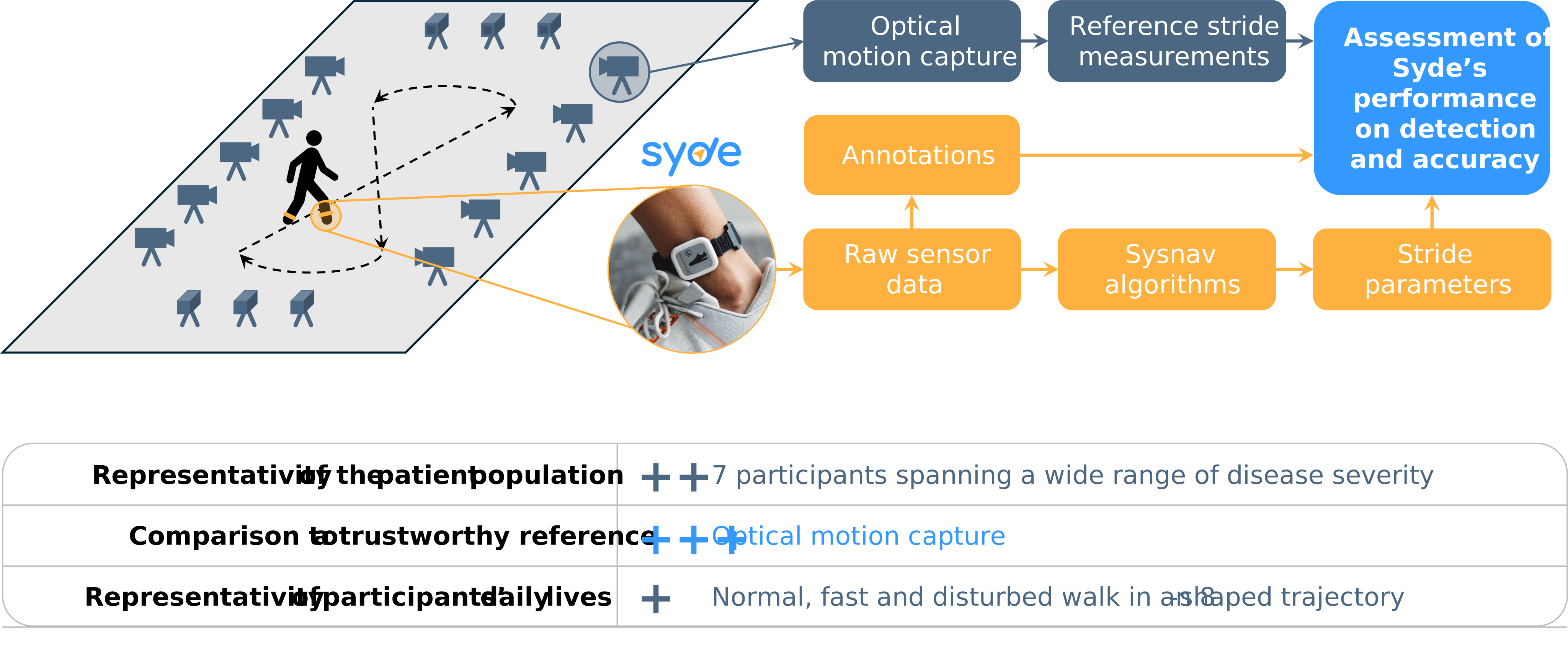
Analytical validation test setup
On four of the seven patients, the sensitivity and accuracy of the Syde platform were excellent: 97% of the strides were detected and the measurement of stride velocity was precise within 5 cm/s. However, on the other three participants, no strides were detected. The high precision of the Syde algorithms came at the expense of sensitivity in this particular patient population.
The reason for this issue quickly became apparent: these three patients had very weak gait, further affected by the use of a walking aid (a stroller and a foot drop brace respectively) or by leaning on the shoulder of a physiotherapist. The Syde platform had previously been used successfully on patients with different types of abnormal or weak gaits, e.g. with Angelman syndrome or Parkinson’s disease¹, and on patients using walking aids², but our stride detection algorithm proved inadequate on the particular gait pattern of these three ALS patients.
Our engineers set out to revise our algorithm to account for this more affected population, without degrading the performance on less affected patients. The revised algorithm successfully identified the abnormal steps that the previous version had missed: the sensitivity went from 0 to 95% on the data of the three patients, without affecting the performance on the other four patients. The algorithm revision also did not affect the reconstruction of trajectories or the computation of stride parameters such as the stride length. Importantly, the precision of the measurements on the strides previously undetected was as high as that on the previously detected strides (e.g. error <0.05 m/s on stride velocity).

Validation of the revised algorithm in controlled environment
To complete the ALS analytical validation, once the revised algorithm had proven successful on the data from the motion capture setting (development dataset), we went on to test it on a validation dataset: the recordings of 26 patients with ALS performing a six-minute walk test while wearing Syde. Our analyses confirmed that this improvement to the algorithm did not come at any expense. The number of detected strides and the estimation of the distance walked on the recordings that were correctly processed by the previous algorithm remained the same. Importantly, the upside was substantial: we recovered the movement data of four severely affected patients (all using walking aids and walking less than 200m in six minutes) with the new algorithm.
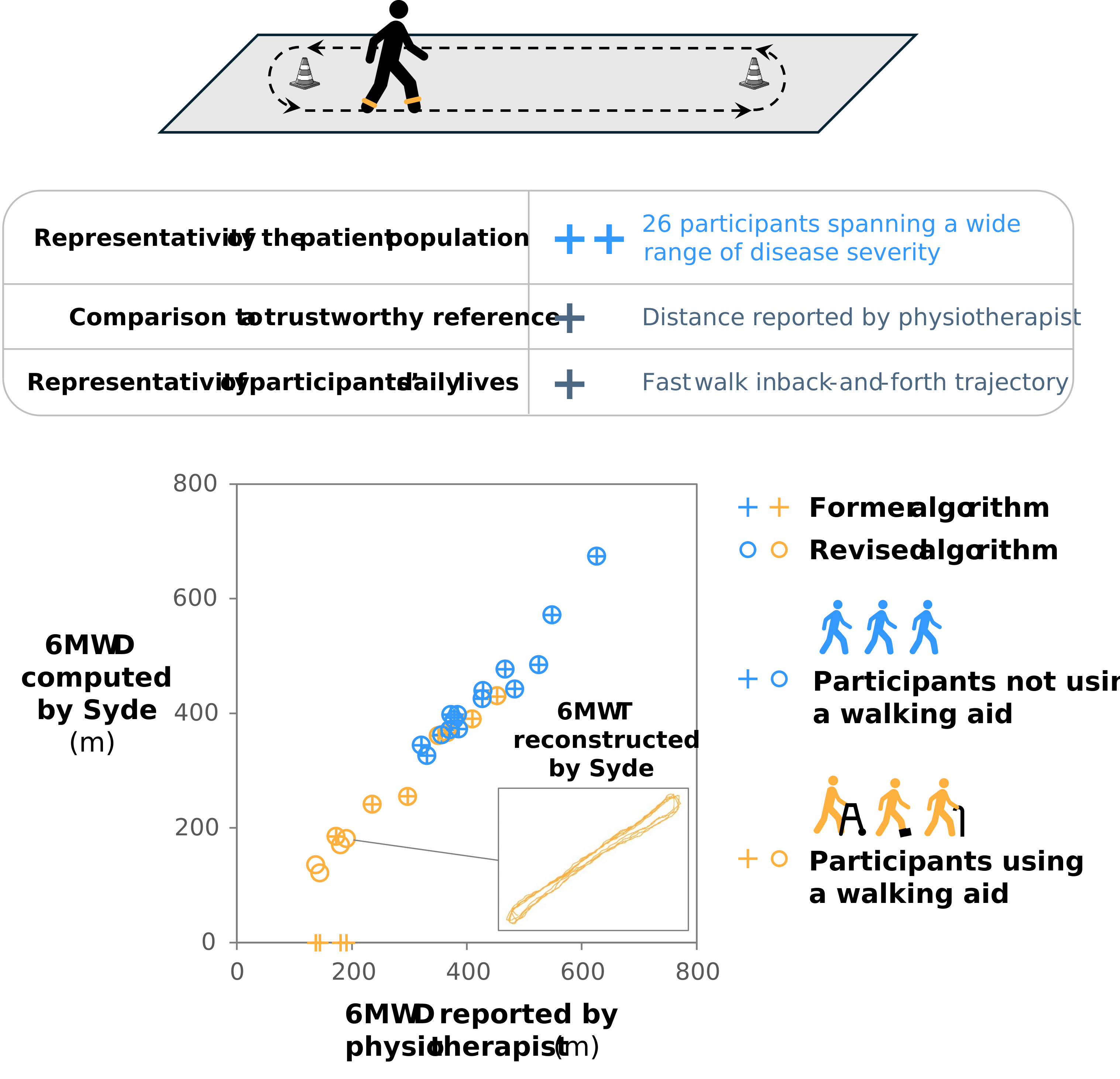
Validation of the revised algorithm on data from 6-minute walk tests.
6MWD: Six-Minute Walk Distance.
Validation on real-life data
We then performed the clinical validation of the revised algorithm, using data on a total of 186 four-week recording periods from 45 ALS patients who wore the Syde sensors daily in real life (see figure below). For most patients, the revised algorithm did not significantly change the number of detected strides. However, for a few patients among the weakest ones (those with the lowest number of strides per hour), the revised algorithm was able to capture many more strides than the previous one. An example from one of these patients, with rapidly progressing ALS, is shown below. During the baseline recording period, the previous algorithm detected almost as many strides as the revised algorithm. As the patient’s gait weakened, their SV95C (maximal ambulation speed) decreased and the revised algorithm picked up more and more additional strides compared with the previous algorithm. During the fourth and last recording period, the revised algorithm computed an SV95C following the same trend of decline as the previous periods, consistent with clinical observation, whereas the previous algorithm did not capture any strides and was thus unable to compute the SV95C.
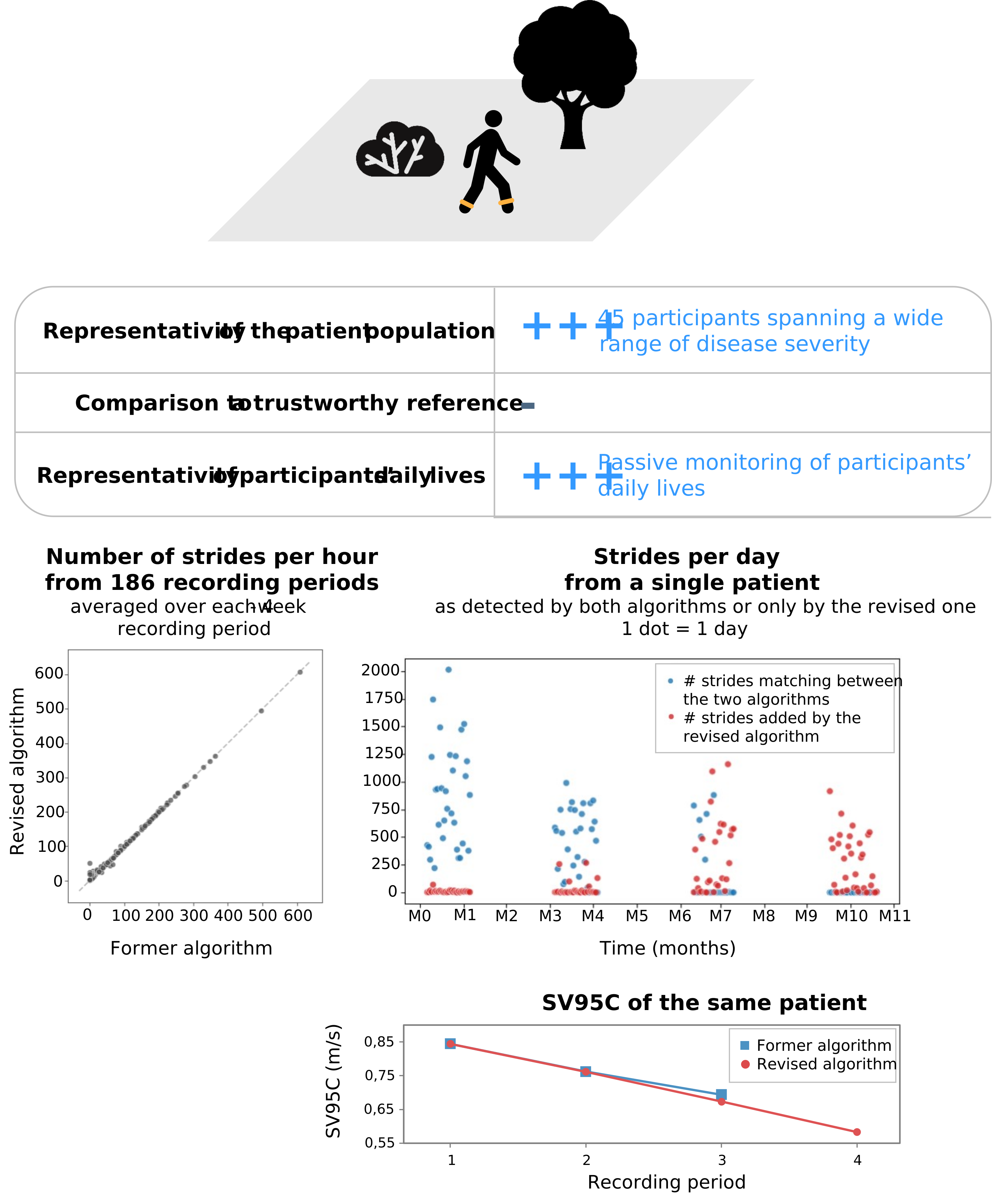
Validation of the revised algorithm on data recorded passively in participants’ daily lives.
SV95C: Stride velocity 95th centile.
The revised algorithm allows us to support ALS disease progression monitoring by reconstructing patient trajectories further along their disease progression, without affecting the variables computed by the previous algorithm in less affected patients.
Conclusion
This example demonstrates that, to use a digital health technology (DHT) for a critical application such as a therapeutic trial, performing an analytical validation of the DHT in the specific target population is essential. Issues specific to a population or a disease might arise even if the DHT has been used successfully in a variety of related conditions.

Thanks to the algorithm revision, the Syde platform has acquired the ability to measure walk-associated variables on borderline non-ambulant patients. This opens the potential to assess the functional autonomy of patients with minimal residual ambulation, a concept that strongly impacts patient quality of life in ALS and beyond, and is typically not captured by functional mobility digital biomarkers.
About the Syde platform
About Sysnav Healthcare
Sysnav Healthcare is a leading business unit of Sysnav, a fast-growing French independent tech company. Since the start of its activities, Sysnav Healthcare has aimed to unlock the potential of real-world data in the medical field by adapting extremely precise motion-capture solutions to the needs of healthcare professionals and patients. The company has developed the wearable device Syde® and is the first-ever to qualify a digital endpoint (the Stride Velocity 95th Centile or SV95C, a measure of the maximum gait speed) with the European Medicines Agency. Sysnav Healthcare is now building the next generation of digital health technologies, so patients benefit earlier and more reliably from life-changing treatments.
References
These references are available at https://healthcare.sysnav.com/clinical-research/#pat.
- Poleur M, Gidaro T, Delstanche S, Gurruchaga JM, Tricot A, Bancel L, Palfi S, Servais L, Degos B. Wearable inertial device for monitoring Parkinson’s disease symptoms: a pilot study in a controlled environment. Sci Rep. 2025 Nov 27. doi: 10.1038/s41598-025-28927-1. Epub ahead of print. PMID: 41309883.
- Ankjær, P. et al. Measuring upper and lower limb movement with Syde® in patients with facioscapulohumeral muscular dystrophy (FSHD): analytical validation in a controlled environment. Neuromuscular Disorders 53, 105562 (2025).
- Haberkamp M, Moseley J, Athanasiou D, et al. European regulators’ views on a wearable-derived performance measurement of ambulation for Duchenne muscular dystrophy regulatory trials. Neuromuscular Disorders. 2019;29(7):514-516. doi:10.1016/j.nmd.2019.06.003
Servais L, Eggenspieler D, Poleur M, et al. First regulatory qualification of a digital primary endpoint to measure treatment efficacy in DMD. Nat Med. 2023;29(10):2391-2392. doi:10.1038/s41591-023-02459-5 - Poleur M, Parinello G, Vrščaj E, et al. Longitudinal evaluation of ambulatory function with ankle wearable technology in ambulant DMD. Neuromuscular Disorders. 2024;43:104441.128. doi:10.1016/j.nmd.2024.07.137
- M. Michaud, G. Parinello, E. Kluczka, C. Cluzeau, M-L. Brechemier, F. Bompaire, C. Tafani, M. Sallansonnet-Froment, T. Gidaro, L. Oudre, D. Ricard. Gait Digital Outcomes Exploration from Continuous Real-World Recordings in Parkinson’s Disease. Mov Disord. 2024; 39 (suppl 1).