Digital endpoints, particularly those based on passive monitoring, enable the capture of meaningful, regulatory-relevant data from the daily life of patients. They are playing an increasingly important role in drug validation, with numerous pharmaceutical and biotech companies including them in the design of their trials. However, including a digital endpoint and its associated technology and processes in a clinical trial is not without consequences on the conduct of the trial and beyond. In this blog, we propose a decision-making support tool to help clinical development teams form a clearer picture of the impacts of digital endpoint selection for their trials.
The Challenges of Digital Endpoint Selection
Digital endpoints, particularly those based on passive monitoring,enable the capture of meaningful, regulatory-relevant data from thedaily life of patients. They are playing an increasingly important role indrug validation, with numerous pharmaceutical and biotech companiesincluding them in the design of their trials. (e.g. Roche, Sarepta Therapeutics or Dyne Therapeutics).
However, including a digital endpoint and its associated technologyand processes in a clinical trial is not without consequences on theconduct of the trial and beyond. The decision-making process forselecting a digital endpoint for a given trial should consider its value-added and all the potential impacts, and include key externalstakeholders, as shown in the framework below.
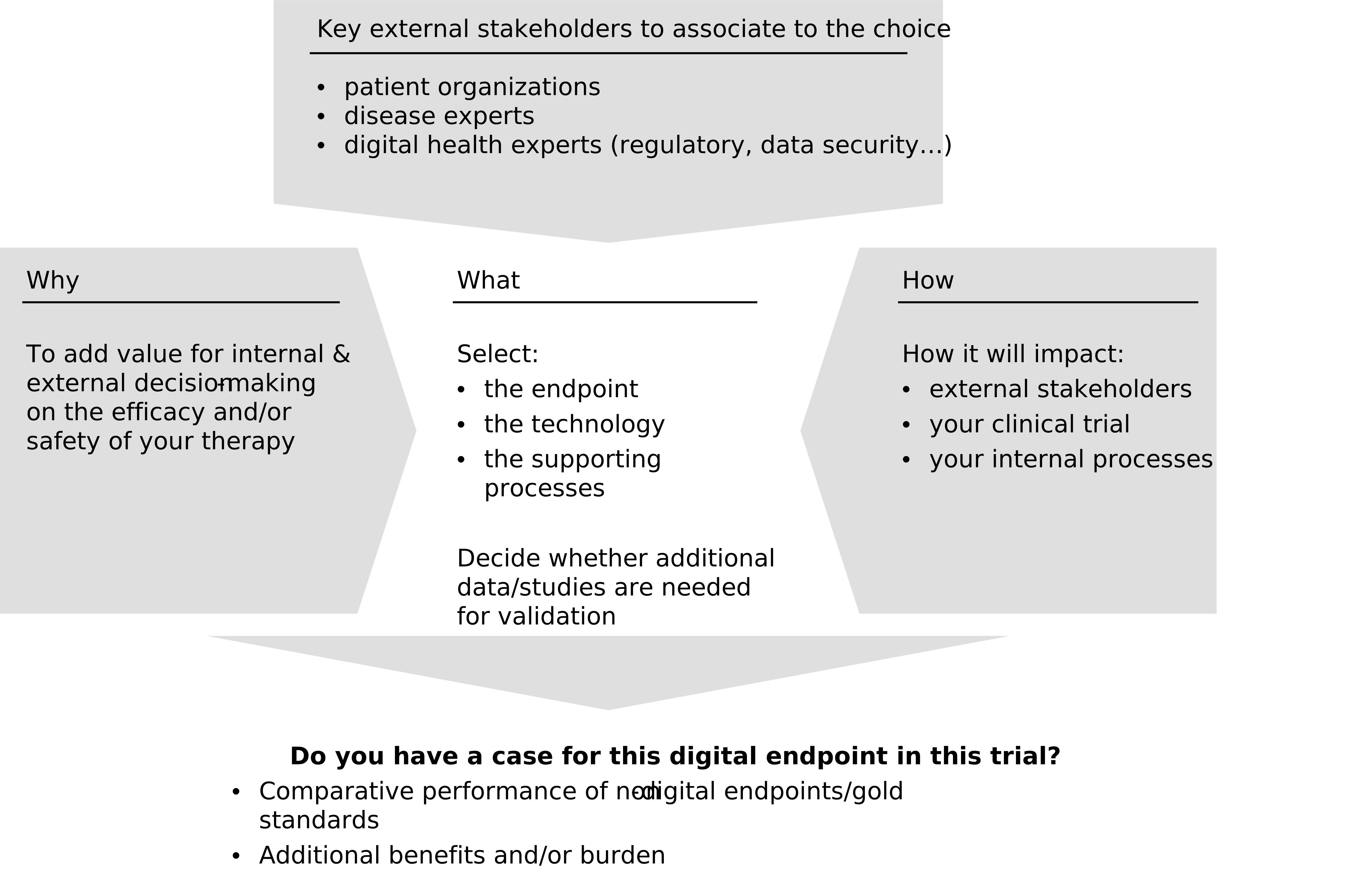
A simplified framework to select a digital endpoint, a technology, and vendors for a clinical trial
A Decision-Making Support Tool for Digital Endpoint Selection
The characteristics of the particular clinical trial considered set different constraints on the choice of possible endpoints. In turn, the
endpoints, their associated technologies, and supporting processes impact the clinical trial and its value creation in many different ways.
By clearly outlining these interactions, the template below is intended as a decision-making support tool for clinical development teams.
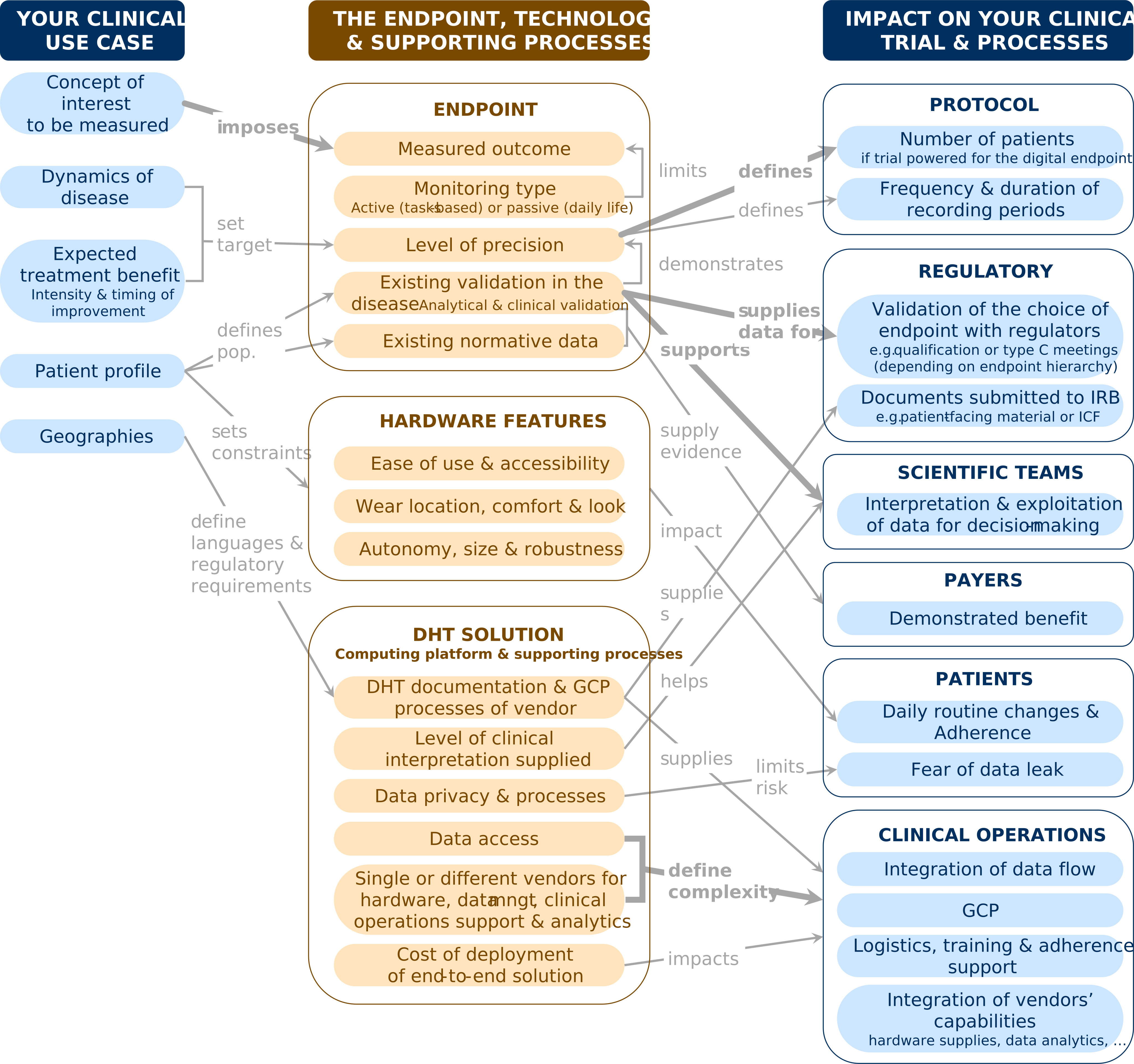
Decision-making support tool: Elements to consider when selecting a digital endpoint for your clinical trial
Illustrative Case Study: Assessing a Syde-Derived Endpoint for a Phase 3 Trial in Multiple Sclerosis
Here is an example of the application of this tool to a trial investigating a drug for primary progressive multiple sclerosis. The digital endpoint considered in this example is the maximal gait speed (Stride Velocity 95th Centile, SV95C) provided by the Syde® platform. Filling out the above-mentioned template for each potential endpoint would help inform the decision-making process.
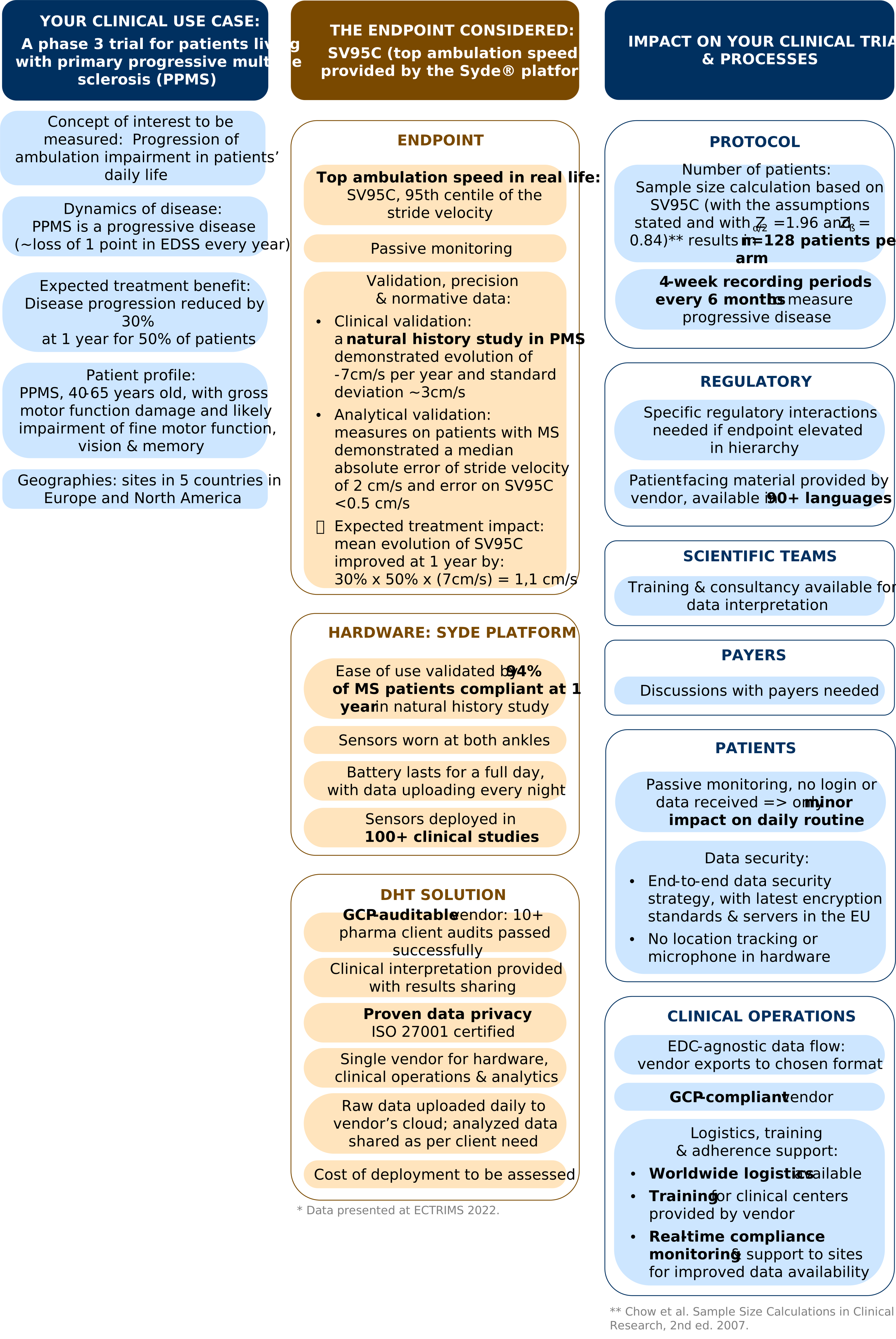
Sample template based on a hypothetical multiple sclerosis drug trial
Conclusion
The potential value of integrating a digital endpoint into the design of a clinical trial is quite clear: to increase the sensitivity to treatment-induced change in patient condition. However, the numerous implications of choosing a digital endpoint, considering its disease-specific validation level, associated wearables, vendor(s) as well as operational, analytical and regulatory processes, can make it complex to evaluate the actual value and costs of any given option. We hope that the decision-making support tool proposed by us can help clinical development teams form a clearer picture of the impacts of digital endpoint selection for their trials.
Further Reading & Resources
On the incorporation of patients’ voice in clinical outcome assessment selection:
- Guidances 3 & 4 of the FDA Patient-Focused Drug Development Guidance Series.
On the validation and qualification of digital endpoints:
- Digital Medicine Society (DiMe)’s Verification, Analytical Validation, and Clinical Validation (V3) Framework, and its extended version, V3+
- Qualification of novel methodologies for medicine development by the EMA
- FDA’s Clinical Outcome Assessment Qualification Program
- FDA’s Guidance on Applying Human Factors and Usability Engineering to Medical Devices.
On the use of digital health technologies in clinical trials: