We recently hosted a panel webinar titled “Deploying Digital Endpoints: A Practical Guide for Clinical Trials”, bringing together experts across clinical operations and regulatory affairs from Biogen, Precision BioSciences and RegenxBio. Our goal was to address the real-world operational realities of deploying wearables in global clinical studies.
A key highlight of our discussion was SV95C (Stride Velocity 95th Centile), the first digital endpoint qualified by the EMA, based on Sysnav’s evidence, as a primary endpoint for clinical trials in ambulatory patients with Duchenne muscular dystrophy (DMD) aged 4 and older. SV95C represents the velocity of the 5% most rapid strides taken by a patient during everyday living, captured continuously by Syde, an ankle-worn fit-for-purpose wearable.
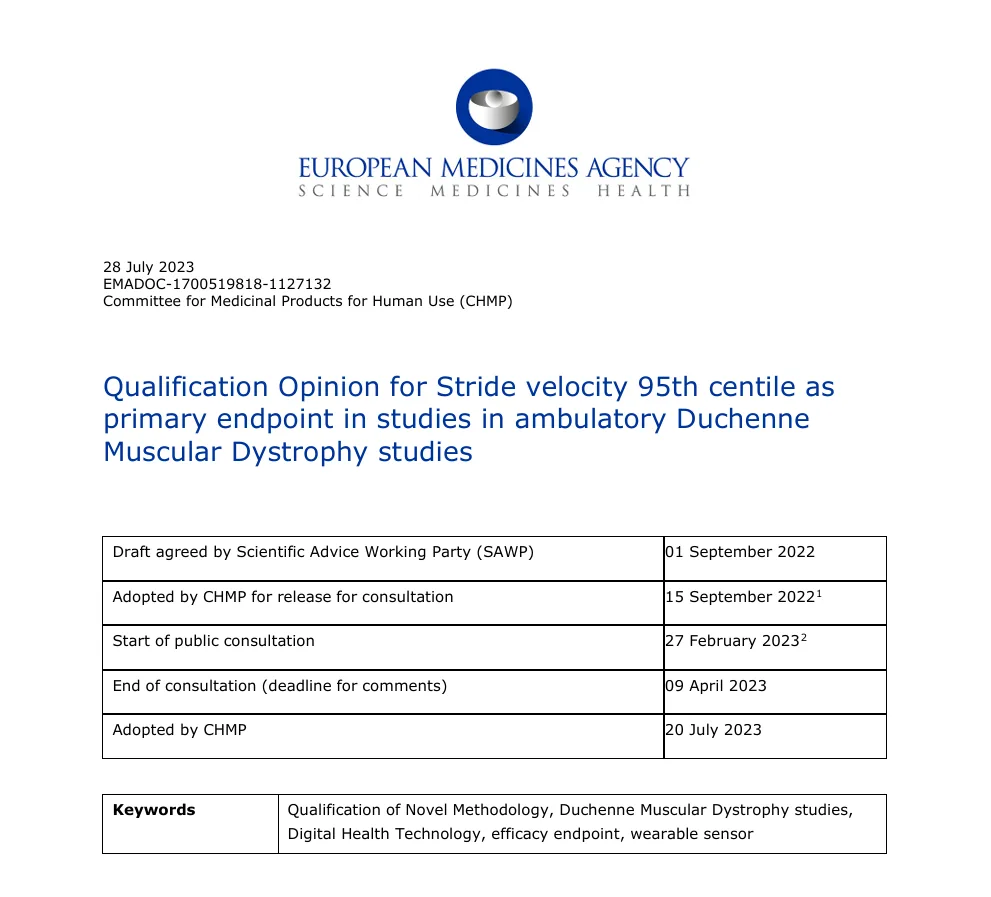
Official EMA Qualification Opinion for Stride Velocity 95th Centile (SV95C) as a primary digital endpoint in DMD studies (July 2023).
But this landmark regulatory acceptance is only the starting line. Delivering SV95C seamlessly at scale across global sites demands solving distinct operational, technical, and stakeholder management challenges. Drawing from our expert panel, this guide outlines the practical steps to successfully integrate SV95C into your clinical study.
Building a Patient-Centric Wearable Experience
Patient compliance is consistently cited as a primary concern when deploying wearable technology. Asking participants, especially pediatric populations, to integrate a wearable device into their daily life requires frictionless devices and clear, ongoing communication.
Maximising data adherence relies on three essential pillars:
- Communicating the purpose of the wearable turns a daily monitoring requirement into a shared mission. Patients and caregivers are more eager to stay adherent with device wear when they understand why their data is critical.
- Frictionless technology eliminates unnecessary logins, passwords, and manual setups. Passive measurement devices that require zero daily interaction from the patient minimize compliance drop-off.
- Early patient input ensures the device fits into real life. Involving patient advisory councils early helps tailor details, such as customizable band colors for pediatrics or info sheets for school staff, which dramatically increase comfort and adherence.
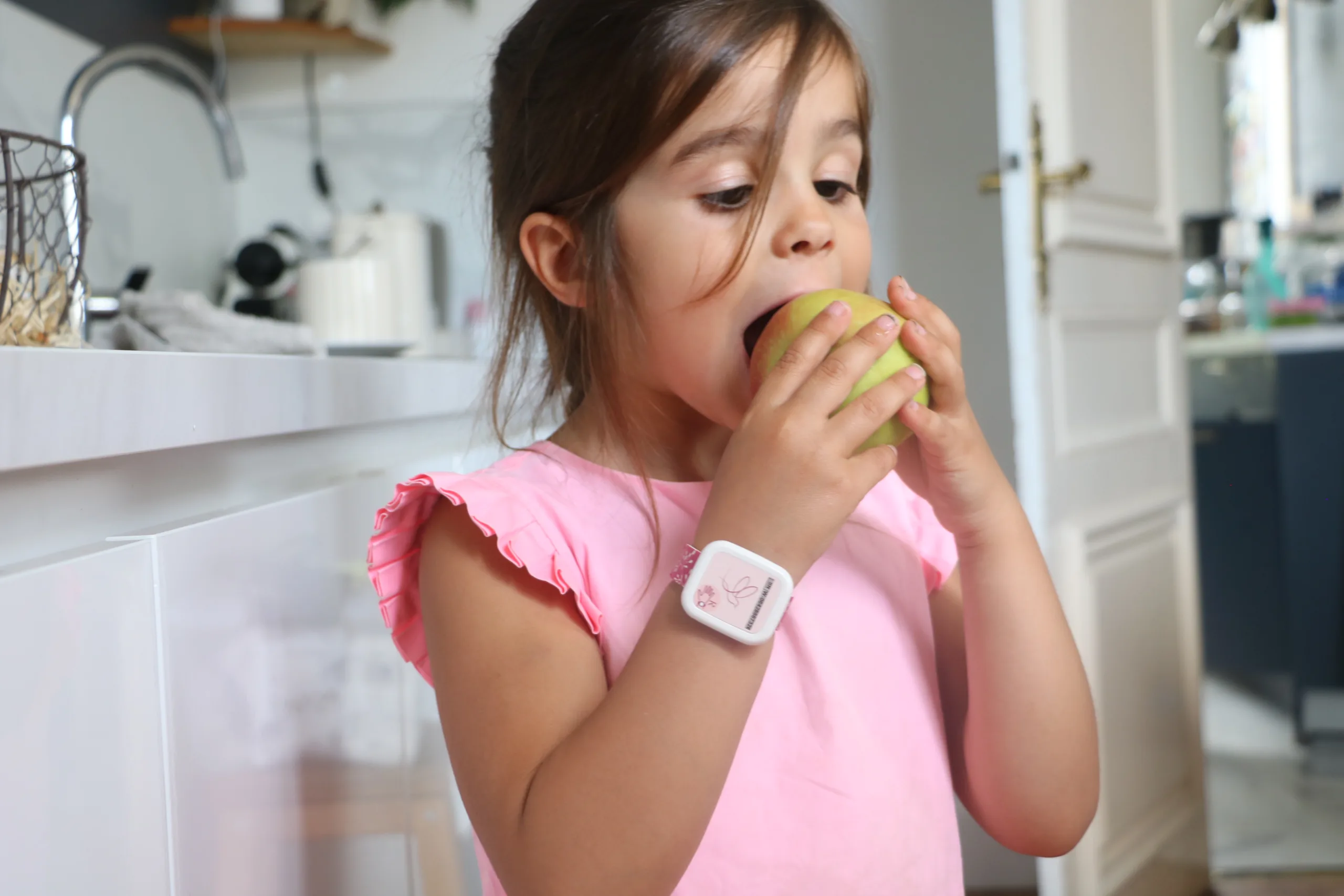
Child-friendly, customizable wearable designs tailored to pediatric comfort to maximize daily wear and adherence.
Drafting a "Wearable-Ready" Protocol
Digital endpoints require protocols built for practical realities. Protocol design mistakes can inadvertently trigger unnecessary protocol deviations or generate distorted data sets.
To ensure your protocol is fully wearable-ready:
- Involve your DHT partner early during protocol and Informed Consent Form (ICF) drafting. Have vendors participate in Investigator Meetings and Site Initiation Visits with physical devices so site staff can gain hands-on setup experience.
- Streamline training for clinical sites that are juggling multiple protocols simultaneously. Provide concise, visual training aids (such as single-page reference sheets highlighting key operational differences between protocols) to reduce site burden.
- Build flexibility into recording windows by avoiding overly rigid mandates regarding start/stop dates or exact minimum wear hours. Designing for real-world flexibility ensures routine scheduling conflicts don’t escalate into formal protocol deviations.
- Protect baseline wear periods by measuring during the patient’s normal daily life rather than during long hospital travel or multi-day clinic visits, which distort typical activity patterns.
Building a Regulatory-Grade Evidence Package
While frameworks like DiMe’s V3+ provide a solid baseline, sponsors looking to move beyond surface-level checklists should take three key actions:
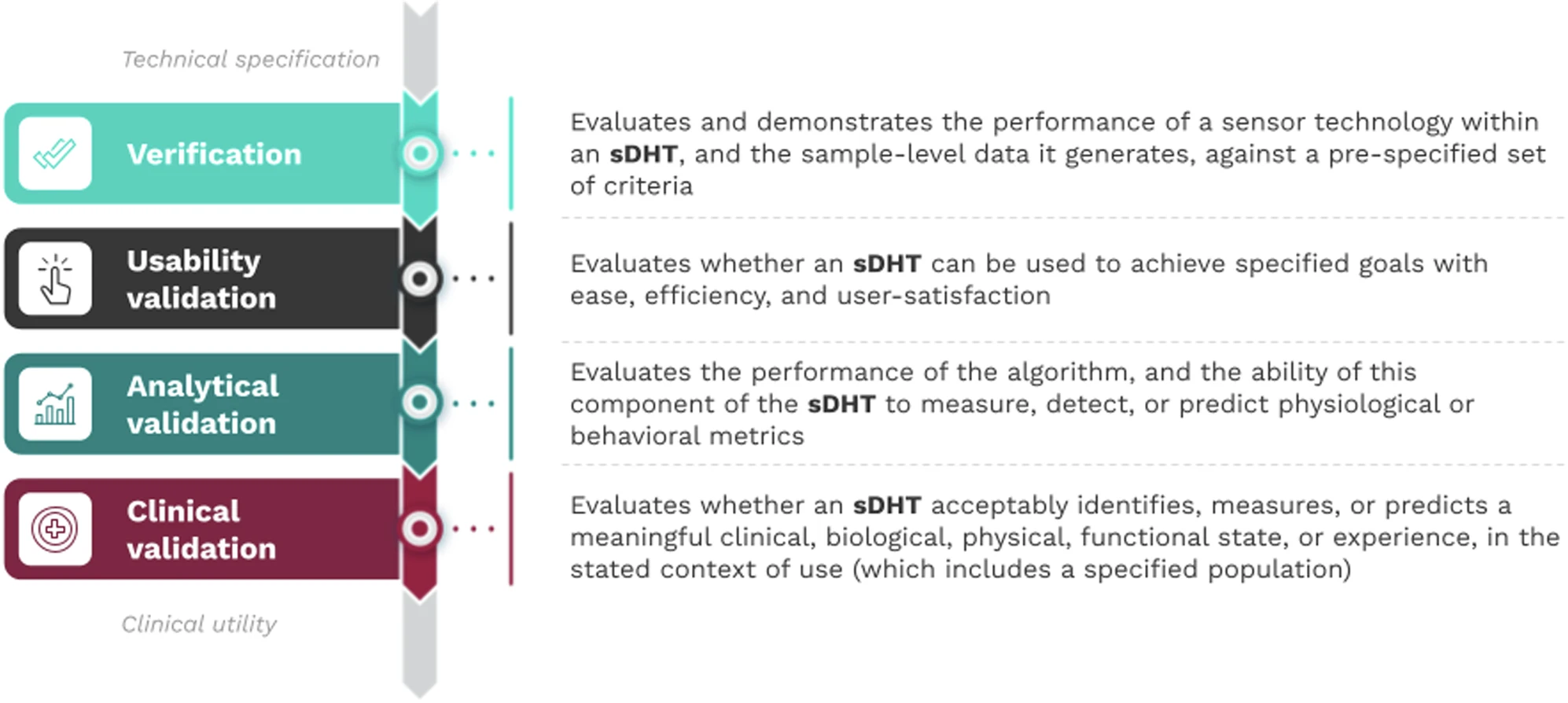
The DiMe V3+ framework for regulatory-grade sDHT evidence generation. Source: Bakker et al., NPJ Digit Med, 2025.
- Request specific validation data points rather than taking generic claims at face value. Validation terminology is often interpreted differently across different vendors and stakeholders, so review exact test cases, retest reliability, and sensitivity-to-change metrics to ensure regulatory-grade rigor.
- Validate usability for your exact patient cohort (e.g., pediatric vs. adult functional levels) to ensure the technology aligns with your specific context of use.
- Establish fail-safe data transfer pathways to protect data reliability. Ensure your deployment plan includes robust fallback solutions, such as encrypted, local USB data extraction, if cellular or Wi-Fi connectivity fails at home or at the site.
Avoiding Operational Traps
Sponsors often fall into preventable operational traps when introducing novel digital measures:
- The Optionality Trap: Making a digital endpoint optional out of concerns over patient burden may split your trial population into arbitrary subgroups. This could complicate statistical interpretation and the study’s overall evidence. If an endpoint brings true objective value, commit to its full protocol integration.
- The Behavioral Bias Trap: Displaying real-time gait metrics (like step counts or speeds) or introducing gamification unblinds participants to their performance. This unmasked feedback could alter natural movement behaviors and introduces significant observation bias into the dataset.
- The Data Overreach Trap: Collecting non-essential sensor data (such as GPS tracking) in the name of thoroughness creates unnecessary privacy risks and participant pushback. Collecting only the sensor data strictly required to calculate the validated endpoint protects participant privacy while maintaining regulatory-grade data integrity.
Proactive Compliance Monitoring
Without real-time visibility into participant wear patterns and device connectivity, non-compliance can go unnoticed until critical data windows are lost.
To maintain high data quality and keep clinical sites supported, trial teams should embed the following compliance monitoring practices:
- Real-time sponsor and site portals: Digital dashboards allow sponsors and site teams to check daily wear hours, verify active uploads, and confirm device connectivity in real time, enabling early troubleshooting during screening or baseline phases.
- Dedicated DHT study manager support: Technology and dashboards alone are only half the equation. Human oversight bridges the day-to-day operational gap. Assigning a dedicated Study Manager to each trial provides site coordinators with personalized guidance, proactive adherence tracking, and immediate issue resolution to maintain data continuity across every stage of the study.
- Actionable status reports for coordinators: Clinical coordinators managing patients on varying study schedules need tailored, clear updates. Providing sites with weekly compliance summaries such as detailed wear hours, upcoming recording windows, and targeted participant reminders reduces administrative burden and prevents protocol drop-off.
- Pragmatic compliance definitions: Establish realistic wear-time thresholds in the protocol and Informed Consent Form (ICF). Rigidly classifying every missed day as a protocol deviation would create unnecessary administrative strain for sites without improving data validity.
Conclusion
By designing frictionless protocols, fostering site and patient engagement, and maintaining rigorous evidentiary standards, clinical trial teams can seamlessly integrate digital endpoints like SV95C to capture sensitive, clinically meaningful drug efficacy data.
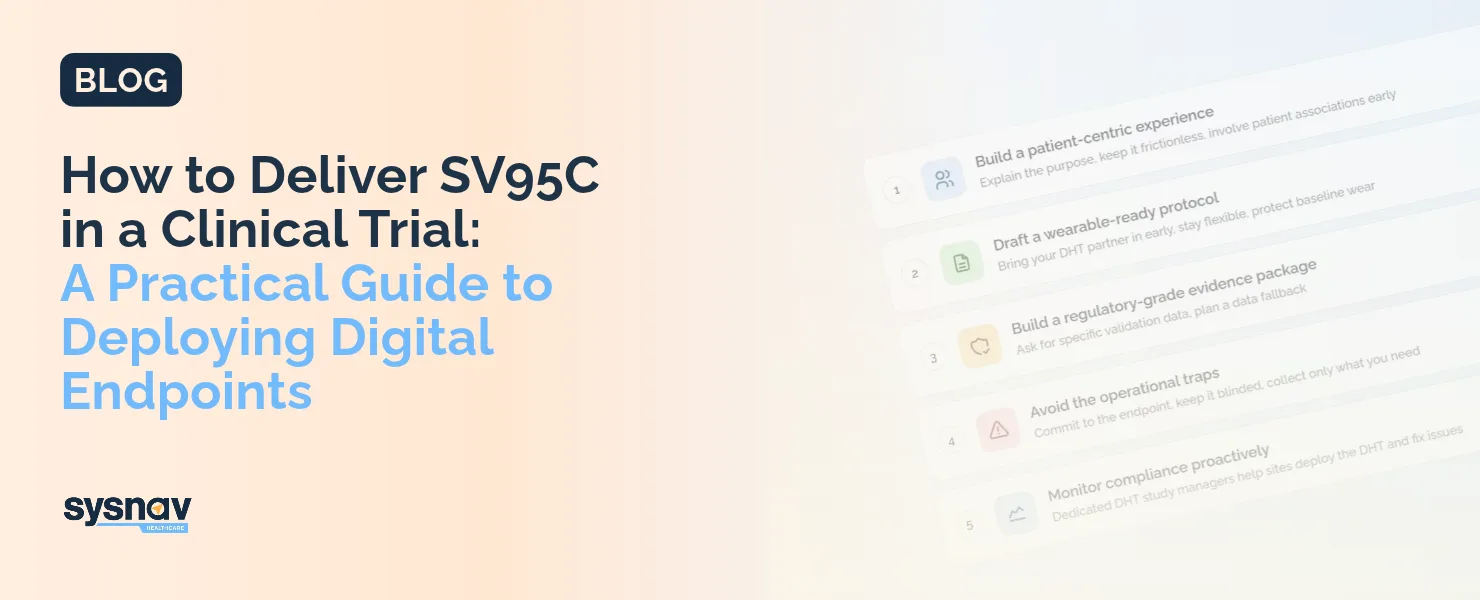
Build a patient-centric experience
Explain the purpose, keep it frictionless, involve patient associations early
Draft a wearable-ready protocol
Bring your DHT partner in early, stay flexible, protect baseline wear
Build a regulatory-grade evidence package
Ask for specific validation data, plan a data fallback
Avoid the operational traps
Commit to the endpoint, keep it blinded, collect only what you need
Monitor compliance proactively
Dedicated DHT study managers help sites deploy the DHT and fix issues
Further Reading & Resources
- Sysnav Healthcare. Deploying Digital Endpoints: A Practical Guide for Clinical Trials [Internet]. 2026 Sep 18 [cited 2026 Oct 14]. Available at: https://healthcare.sysnav.com/sysnav-healthcare-webinar-2026
- European Medicines Agency, Committee for Medicinal Products for Human Use. Qualification Opinion for Stride velocity 95th centile as primary endpoint in studies in ambulatory Duchenne Muscular Dystrophy studies [Internet]. Amsterdam: European Medicines Agency; 2023 Jul 28 [cited 2026 Oct 14]. Report No.: EMADOC-1700519818-1127132. Available at: https://www.ema.europa.eu/en/documents/scientific-guideline/qualification-opinion-stride-velocity-95th-centile-primary-endpoint-studies-ambulatory-duchenne-muscular-dystrophy-studies_en.pdf
Bakker JP, Barge R, Centra J, Cobb B, Cota C, Guo CC, et al. V3+ extends the V3 framework to ensure user-centricity and scalability of sensor-based digital health technologies. NPJ Digit Med. 2025 Jan 24;8(1):51. doi: 10.1038/s41746-024-01322-2. PMID: 39856145.